Dupe Detective
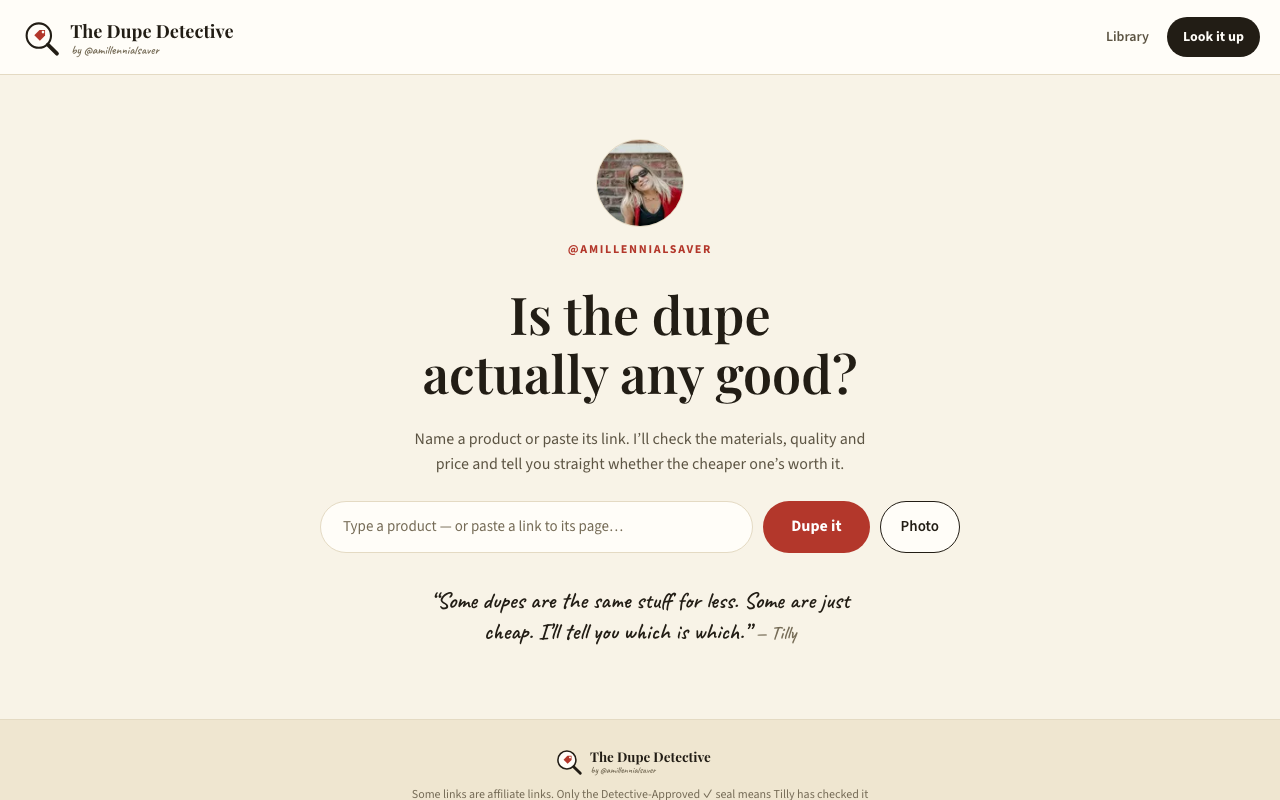
The internet is full of "dupes" — cheaper versions of expensive products that are supposedly just as good. Nobody explains how close the dupe actually is, which is the only question that matters.
How it's built
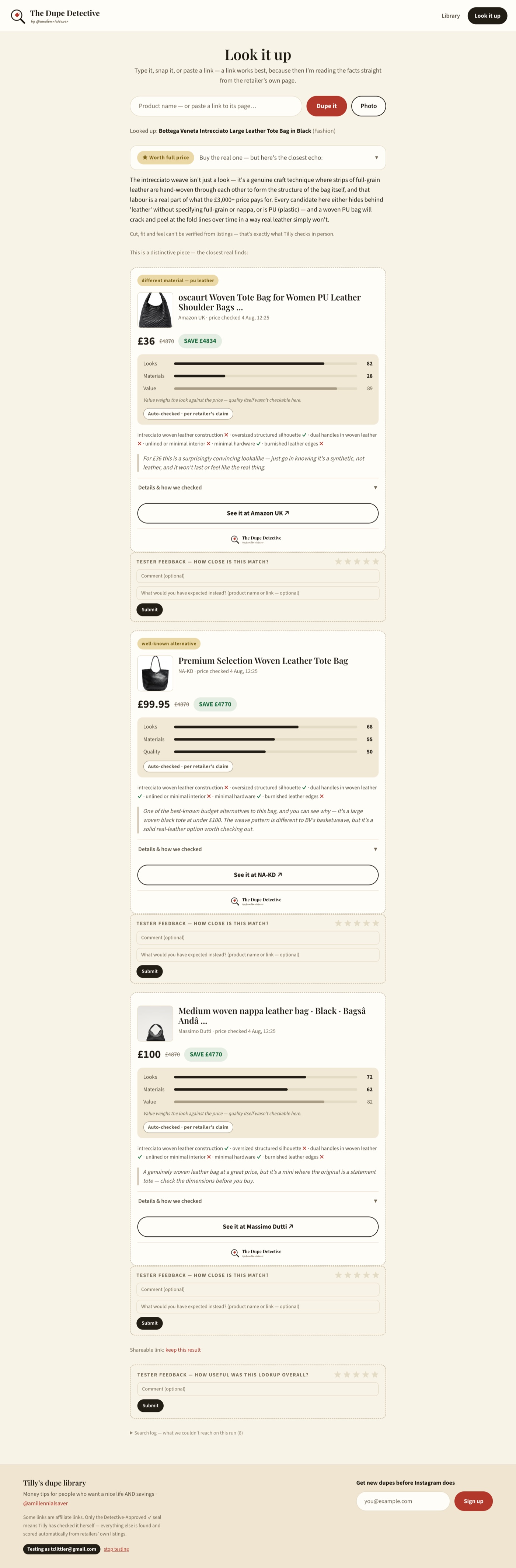
Search (or photograph) a product and it comes back with three similarity bars — looks, materials, quality — rather than a single verdict. The interesting part is the classification layer: a candidate is only badged as a true dupe if materials and quality both clear a threshold; if it just looks the part, the card calls it a lookalike and the word "dupe" never appears. There's also a trade-up path for when the honest answer is "spend slightly more on the properly-made version."
Under the hood: Next.js on Vercel, product library in Supabase, and Claude as the taste engine, working against an editorial "taste document" so the analysis has one consistent voice instead of generic AI beige. Your stated priority — same stuff, best price, or balanced — reorders results; nothing gets hidden. The whole thing runs in mock mode locally with SQLite and canned AI responses, which made it fast to iterate on without burning tokens.
Here's a full run against a £4,870 Bottega Veneta tote — the verdict ("worth full price, but here's the closest echo"), then each candidate scored per-spec against the retailer's own listing: